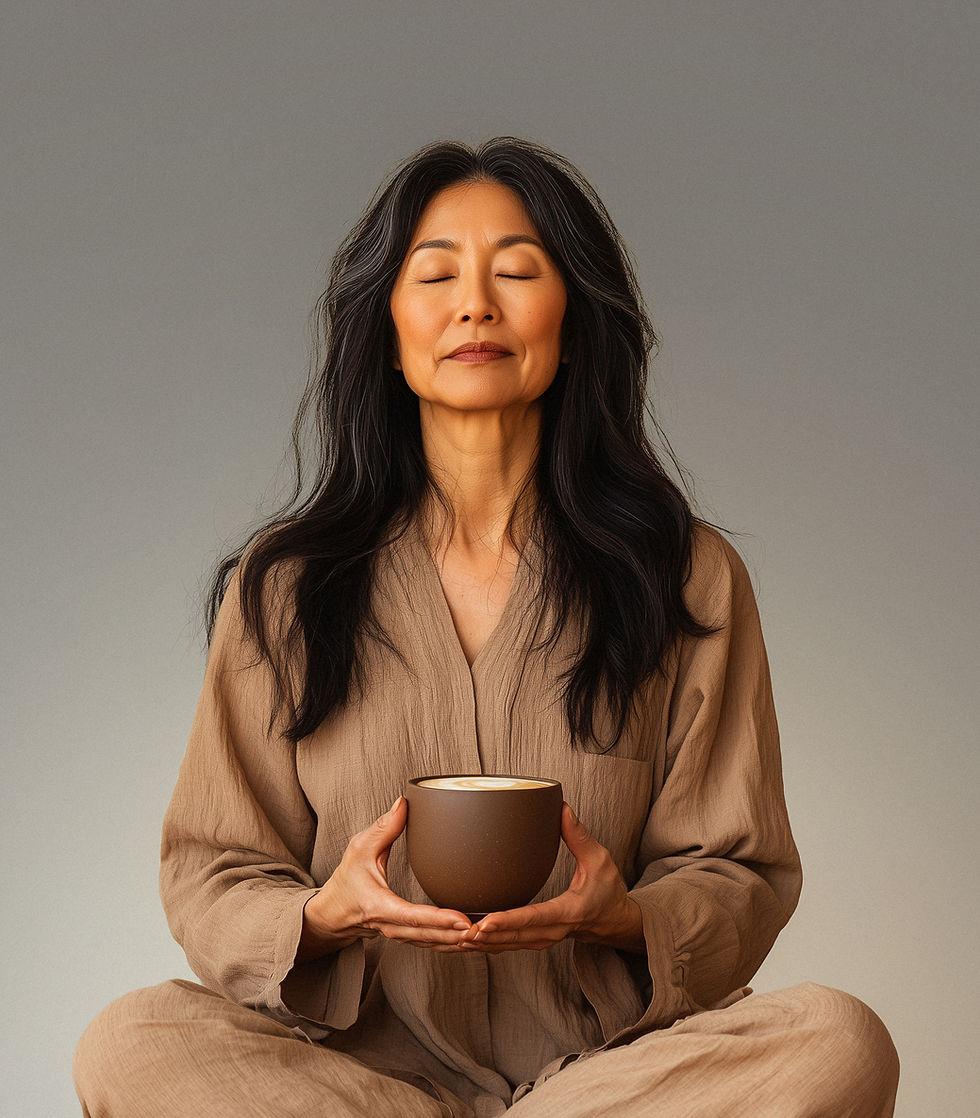
Through Ayurveda, we learn ways to conserve prana or life energy -- in our actions, thoughts, and words, in our choice of ingredients in food, and in our connections to the living world --
More than twenty years ago, I had developed a practice of journaling early in the morning to capture my unfiltered thoughts. When I look back, the journal entries often surprised me -- they were vast and esoteric, and contained personal wisdom that I failed to comprehend at the time. That day in 2001, while journaling in my room in San Jose, California, I had an epiphany about my future.
To understand the significance of this, you must first understand my mindset back then. At that time in my life, I was a mechanical engineer in a literal sea of engineers in the Silicon Valley, slaving away at my job in the corporate world. I had recently finished graduate school in engineering at Stanford and prior to that, I completed my undergraduate engineering at MIT. My entire identity and sense of accomplishment was tied to my job. The world was material; my existence was practical and driven. Most of the time, I reveled in the engineering work that I did, and every so often, the politics of that world would force me to look elsewhere for joy -- that's when I delved into Vipassana meditation and began writing poetry. Perhaps, my right brain was craving some attention. Whatever it was, it pulled at me. I couldn't help myself -- meditating whenever I had free time and feeling inspired to write when I woke from sleep. I had a deep connection with this part of me that was trying to express itself through poetry and prose.
a journal entry
That day in 2001, in my early morning journal entry I felt compelled to scribble: my life's work would be in the space of energy.
Later that day, I read through my journal entry and scratched my head, puzzled by this pronouncement. Energy? Which energy? Immediately nuclear power plants came to mind, an area that I had zero expertise in. Momentarily, I thought about returning to school to study nuclear engineering and perhaps getting in touch with a girl I knew at MIT who studied nuclear engineering -- but she became weird around graduation, so maybe not. I wondered whether studying an entirely new discipline was the meaning behind the insight. I thought about electrical energy and electrical engineering -- as I was already surrounded by hundreds if not thousands of "double E's" (electrical engineering graduates) in San Jose -- but quickly said no, that wasn't going to be it either. Wind energy? Solar energy? Chemical energy? I couldn't figure it out.
A few days later, this poem emerged from another journaling session:
Rising above mountain tops
to endless fields of snow-like bastions of nothingness,
towering vortices shape the scape before me.
Entranced by this illusion of white pillow-like ripples,
I pass through this subtlety of nature
only to be mesmerized by a seemingly non-existent existence.
At a lofty shore, I gaze down to see an entire universe
of gross manifestations
with all the complexity of colorful matter,
seemingly real forms with an emptiness inside.
With inexplicable speed,
the billowing masses become lighter,
the wispy white forms become thinner,
the meandering muslin-like sheets flow
into a primordial tide,
until all fade into non-existence.
I couldn't find an explanation to help this poem take its place in my world. It read like an excerpt from fantasy fiction, but it had that same pull on me, and I felt a deep connection to the concepts in it. And just like the last line of my poem, both of these thoughts -- about the direction of my life's work and the poem I had written -- faded into non-existence from my conscious mind.
Food, Herbs -- sources of prana
Since COVID (2020), I began studying Ayurveda, a full science of self-care, preserved as a living tradition in India and through ancient texts. Ayurveda was, perhaps, the envy of the ancient world (~5,000 BCE) and its centers of knowledge at Takshashila, Nalanda, and Vikramshila in the Indian sub-continent. There are records of the Greeks, Chinese, and other contemporaries learning from these centers in antiquity. And in spite of attempts to destroy the knowledge, Ayurveda went underground for almost 800 years during foreign rule in India, and has re-emerged post-partition in it's entirety as a holistic healthcare system.
The wisdom held in Ayurveda is vast. The philosophical foundations discuss both external (e.g. origins of the universe) and internal(e.g. nature of consciousness) concepts. What's relevant here is the concept of brahman, or that infinite unmanifest absolute energy through which all things manifest. This has been portrayed, in terms of function, in the 1999 movie "The Matrix", as the matrix (source code through which all life manifested). Brahman is the aditattva or the root of all existence and in its purest form is perceived as the primordial sound vibration (aum) and in movement as prana. At a cosmic level, prana is the energetic force through which the elements of nature (space, air, fire, water, earth) express themselves. Incidently, within Ayurveda, prana is also seen as the same energetic force that animates each being.
What's particularly fascinating about the elements of nature is the manifestation from subtle to gross matter, with space being the subtlest and earth being the grossest. In order to perceive subtle elements, we must slow down gross movements of the body and the mind. In stillness, the lines of my poem begin to make sense. With my mind focused ("Entranced"), I am able to perceive "the subtlety of nature", both manifest and unmanifest. As the elements become lighter, thinner, and more subtle, they return to their ultimate form as cosmic energy, as prana, and ultimately as Brahman, unmanifest energy.
Through Ayurveda, we learn ways to conserve prana or life energy -- in our actions, thoughts, and words, in our choice of ingredients in food, and in our connections to the living world -- in order to live a healthy, long, and purposeful life. Being observant of our world, and slowing down in mind and deed, conserves prana. According to Rigveda Sayana Bhashya (n.d.), in RV 10.129.1–2,
"Then there was neither non-existence nor existence. There was no realm of air nor the sky beyond it. What covered it? Where? In whose protection? Was there the water, deep and profound?
There was no death nor immortality. There was no night nor day. That One breathed without wind, by its own power. Apart from That, nothing else existed. "
Again, this theme of the ultimate form of energy, is so beautifully described in the lyrical, sacred Rig Veda. This moment before creation of the cosmos when Brahman was undifferentiated potential, and the three worlds had not come into existence, there is mention of "That One breathed without wind, by its own power. " referring to the primordial unity that holds prana, that is ultimately prana.
Zen garden -- illustrating thoughts coming full circle
Now journaling some twenty-five years later at home in Southern California, as an Advanced Ayurvedic Practitioner, I find my thoughts have come full circle, as my entire sense of purpose is firmly grounded in helping society reclaim their connection to energy, to prana -- through food, through mind and deed, and through community.
Late summer’s golden light may feel good to the soul, but it’s not always kind to your skin. Heat, midday sun exposure, dehydration, and long days outdoors can leave your complexion dull, dehydrated, and prematurely aged, and that's setting aside the age factor. Fortunately, Ayurveda offers a powerful age-defying antidote: abhyanga, the daily practice of warm oil massage.
To understand this best, let's first, consider how exposure to the sun affects us.
We need sunlight in moderate proportions. Our wake-sleep cycles depend on it. As do a number of other critical functions in the body. Our skin is able to naturally produce Vitamin D with exposure to the UV (ultraviolet) wavelength of sunlight, which is strongest at midday. Vitamin D is crucial for bone health, immunity, and mood. Research shows that Vitamin D deficiencies are associated with infection, cancer, diabetes mellitus, cardiovascular disease, and autoimmune disease (1).
On the flip side, too much sun exposure opens us up to aging, damage to the skin and repair mechanisms within the skin, sunburn, hyperpigmentation, skin thickening, and skin cancer. One's propensity for these skin issues depends on one's diet, skincare practices, quantity of melanin, genetics, and most importantly frequency and intensity of light exposure.
Wrinkles form when collagen breaks down, elastin weakens, and the skin loses moisture, antioxidants, and nutrients. UV exposure from the summer sun accelerates this damage, triggering oxidative stress, inflammation, and the enzymes (MMPs) that degrade skin structure. Combine that with dehydration, sweat, chemicals in our skin creams, and depleted oils — and skin can feel tight, dry, rough, or older than it should.
Protecting and nourishing our skin, the largest organ of the body, is a balancing act. So what can be done?
Begin your day off right: Within the first 30 minutes of waking up, find a window seat or better yet, step outdoors onto a deck, patio, or balcony, or go for a walk, run, or stroll, and set your gaze in the direction of the horizon. Those morning rays of light (before 10am), are the most beneficial because the naturally occurring longer wavelengths -- such as red light -- stimulate your brain, wake you up, and increase your energy. Morning light is essential to set our internal body clocks! This early light is also said to prime the skin to handle stronger sunlight later.
Adjust exposure based on time of day: Paying attention to time of day and the strength of the sunlight is particularly important when doing any activities outdoors -- whether that's playing at the beach, picnicking at a park, hiking along trails, or running or walking in urban areas. According to Ayurveda, in the summertime, exercise in the early morning (until 10am) is considered better than midday because of the intensity of the sun. Consider wearing comfortable breathable fabrics, wearing hats, and applying skin protectants based on your skin type. To protect your skin, it's important to consider your own skin sensitivities and family history. For many, tinted sunscreens (iron oxides with titanium dioxide) can help prevent hyperpigmentation from both UV light and visible light (2). In Ayurveda, both herbs and medicinal oils can help to protect the skin.
Should one care about light from their digital devices? The simple answer is YES. While digital devices (e.g. phones, laptops, tablets) emit blue UV light that is weak in terms of its ability to damage the skin, the same blue light is a super signaler to our brains to stay awake and alert. During the daytime, blue light helps with alertness, mood, and cognitive performance. The problem is blue light exposure after sunset, when the brain expects darkness. The blue light causes the brain to suppress hormones that signal "sleep", negatively affecting restful and timely night sleep, with a potential to disrupt the sleep cycle, cause brain fog, fatigue -- this ultimately interrupts skin repair mechanisms that occur at night during sleep, accelerating skin aging. After sunset, consider wearing blue light blockers or changing settings on your devices to shield you from blue light.
Take care of your largest organ. Have a skincare practice: Ayurveda sees this as an imbalance in both vata and pitta dosha: dryness, heat, and instability in the body’s outer layer. Ayurveda has an age-old holistic approach to support the skin through the practice of Abhyanga.
Abhyanga supports the skin through biochemistry, physiology, and energetics.
This soothing ritual cools, calms, and nourishes the skin. Oil selection depends on one's constitution (proportion of vata, pitta, and kapha in one's body). This can be assessed by a trained Ayurvedic practitioner, who can also advise you on the best oils for your stage of life, season, climate, activities, and imbalances. Ayurveda holds the key to longevity with oils that help repair damage, restore hydration, and support healthy collagen. Ayurvedic herbal-infused oils penetrate deeply, flushing toxins, calming inflammation and reducing oxidative stress, and protecting the skin’s barrier against further damage. Plus, the massage itself boosts circulation and lymph flow — refreshing tired tissues, reducing puffiness, and enhancing your natural glow. Abhyanga holds deeper secrets in its ability to reduce pain, tonify muscles, as well as calm the nervous system. In addition, a trained practitioner can also advise you on the foods and habits that can best support skin nutrition, further strengthening the effect of abhyanga.
Let your skin recover with intention. Begin with a few minutes of abhyanga each day. It can soften the signs of sun, restore luster, and carry your glow into fall, preventing vata from further dulling one's skin.
Your skin doesn’t have to age with the season — give it the Ayurvedic reboot it deserves.
References:
(1) Cui A, Xiao P, Ma Y, et al. Prevalence, trend, and predictor analyses of vitamin D deficiency in the US population, 2001-2018. Front Nutr. 2022;9:965376. Published 2022 Oct 3. doi:10.3389/fnut.2022.965376
(2) Zhou C, Lee C, Salas J, Luke J. Guide to tinted sunscreens in skin of color. Int J Dermatol. 2024;63(3):272-276. doi:10.1111/ijd.16954